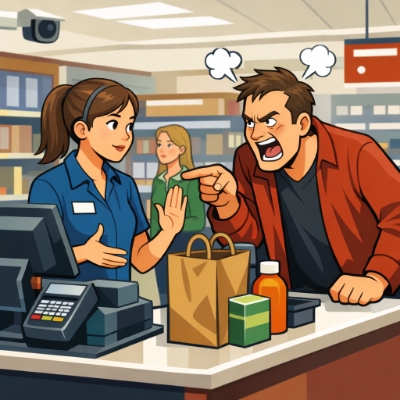
When a customer starts shouting, the mood in a store can shift in seconds. Staff feel the pressure, other shoppers notice it, and the interaction can quickly spiral. The goal is to stay steady, reduce tension, and keep the situation under control.
Why shouting affects the whole store
Most difficult customer interactions do not begin with outright aggression. They usually start with frustration. But once a customer raises their voice, everything changes. Staff can feel flustered, nearby shoppers become uneasy, and what started as a service issue suddenly turns into a conflict.
That is why these situations call for more than patience. Frontline staff need a clear, practical way to respond when emotions are running high. A broader look at this issue appears in this article on managing bad customer behaviour for frontline workers, which explores how service teams can respond to difficult behaviour more effectively.
Why customers raise their voice
Most customers do not walk into a store intending to cause a scene. More often, something has gone wrong, and the frustration has been building before the conversation even starts.
Common triggers include:
expectations not matching what happened
long waits or repeated delays
feeling ignored or dismissed
frustration with store policies
several smaller issues building into one bigger reaction
Once people feel they are not being heard, they often start expressing themselves more forcefully. That does not make abusive behaviour acceptable, but it does help explain why some situations escalate so quickly.
Why preparation matters before anything goes wrong
Handling a shouting customer usually starts before anyone actually starts shouting. Teams are in a much stronger position when they know what warning signs to look for and what steps to follow if things escalate.
Spot the early warning signs
A customer does not usually go from calm to shouting in an instant. There are often signs beforehand, such as an irritated tone, impatient pacing, repeated interruptions, invading personal space, or tense body language.
Catching those signs early can give staff a chance to slow the interaction down before it becomes harder to manage.
Make sure boundaries are clear
Preparation also depends on clear store procedures. Staff should know:
when to call a supervisor
what behaviour crosses the line
what safety steps apply if a customer becomes threatening
how to protect other staff and customers if needed
When those boundaries are clear, people are less likely to freeze or second-guess themselves under pressure.
What to do when a customer starts shouting
Once a customer raises their voice, the main priority is to avoid pouring more emotion into the situation. The point is not to win the argument. It is to bring the temperature down enough to deal with the issue safely and professionally.
Stay calm and bring the temperature down
The quickest way to make things worse is to match the customer’s energy. Speaking faster, becoming defensive, or raising your own voice usually pushes the interaction further off course.
A calmer response tends to work better. That means slowing down, breathing steadily, and keeping your voice level. When one person stays composed, the situation is less likely to spiral.
Listen before trying to solve the problem
People often start to settle once they feel properly heard. That does not mean agreeing with everything they say. It means showing that you understand the problem they are trying to explain.
Helpful phrases might include:
“I can see this is frustrating”
“I understand why you’re upset”
“Let’s work through what’s happened”
That kind of response acknowledges the emotion without giving up control of the conversation.
Use body language that keeps things calm
Body language matters just as much as words. Staff can accidentally add pressure by standing too close, folding their arms, or looking tense and confrontational.
A better approach is to:
keep hands visible
maintain a steady posture
stand at a slight angle rather than directly squared up
leave enough personal space
Small changes like these can make the interaction feel less confrontational and more manageable.
Set boundaries without making things worse
Even if a customer is upset, there still has to be a line. Staff should not be expected to tolerate abusive or threatening behaviour without responding to it.
The most effective boundary is usually calm and direct. For example, it may be appropriate to say that you want to help, but the conversation needs to stay respectful. That keeps the interaction professional while making it clear that shouting or abuse is not acceptable.
A good boundary is not about punishing the customer. It is about stopping the situation from becoming more harmful.
Shift from emotion to resolution
Once the customer starts to calm down, the focus can move from emotion to problem-solving. This is often the moment when the conversation becomes workable again.
Give practical next steps
Customers usually respond better when they know exactly what happens next. Vague reassurance can make things worse, especially if they already feel ignored.
A more effective approach is to explain the available options clearly. That might mean outlining the refund process, explaining the next step in a complaint, or clarifying what can and cannot be done under store policy. Clear options help people feel they have some sense of control again.
Know when to bring someone else in
Not every situation should be handled by the first staff member involved. Sometimes the best next step is to involve a supervisor or another team member.
That is not a sign of failure. In many cases, a fresh voice, a different level of authority, or simply a reset in the interaction helps move things forward.
Safety comes before service
Most shouting incidents remain verbal, but staff still need to stay alert. If a customer becomes physically threatening, moves aggressively into someone’s space, or makes other people feel unsafe, the priority changes immediately.
At that point, the response should focus on:
creating distance
calling for help
protecting staff and nearby customers
following store safety procedures
No customer interaction is more important than personal safety.
What should happen after the incident
Just because the interaction is over does not mean the effect disappears straight away. Difficult encounters can leave staff feeling tense, unsettled, or distracted long afterwards.
That is why a short debrief can be so useful. It gives staff a chance to talk through what happened, what worked, what could have been done differently, and whether any extra support is needed. Over time, that kind of reflection builds confidence and helps teams respond more consistently.
Conclusion
A shouting customer can disrupt the whole atmosphere of a store, but it does not have to turn into chaos. The most effective response is usually calm, clear, and firm: listen carefully, manage your own tone, set boundaries, and move toward practical next steps whenever possible.
For retail teams, confidence in these situations does not usually come from instinct alone. It comes from preparation, clear processes, and practice. When staff know how to respond, difficult interactions become easier to manage and far less overwhelming.