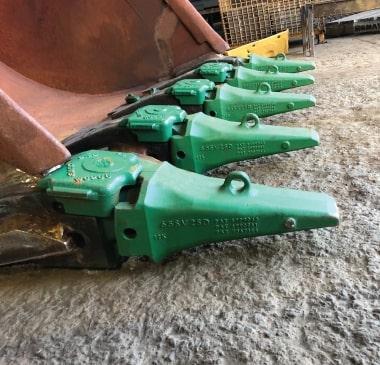
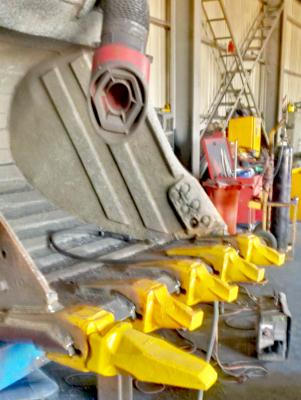
When choosing bucket teeth for your earthmoving and construction machine, the first thing you need to determine is what is it made from?
There are 3 main materials used in the construction of Bucket Teeth and each has its pros and cons:
1. Forged teeth
2. Cast teeth
3. Fabricated teeth
Forged Teeth are manufactured from alloy steel and heat treated to produce a tooth with maximum wear resistance and impact. The Forged Teeth offer over 50% more wear life over fabricated teeth.
Cast Teeth are manufactured from untempered ductile iron and also heat treated to produce a tooth with maximum wear resistance and impact, which can also be self-sharpened. Cast Teeth are a more cost effective option to Forged Teeth and are stronger and lightweight in design.
Fabricated Teeth are manufactured from alloy steel and have been hardened for added wear resistance and impact. Fabricated Teeth are also self-sharpening.
Secondly you need to look at how the tooth has been designed. The shape of a bucket tooth will determine its life expectancy and application. There are 3 main factors to consider when choosing your bucket teeth:
1. Wear Life
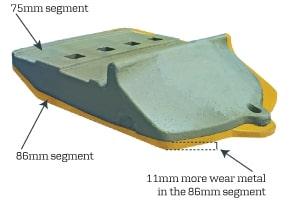
The wear life of bucket teeth is determined by not only the manufacturing material and its application, but also their shape, which will impact on the amount of wear surface that comes into contact with sand and other materials being excavated or loaded. The greater the wear surface the longer the life of the tooth, but some teeth with large wear surface are not ideal for all applications such as penetrating hard surfaces.
Teeth with high wear life may be more suited to loading and material handling applications (longer life), whereas other less wear resistant teeth will be suited to excavating and trenching applications (high penetration and impact).
2. Pentration
Bucket Teeth that are typically sharp and pointy are more suited to applications which require penetration of hard surfaces such as excavating and trenching and are often referred to as “Tiger Teeth”.
3. Impact
Bucket Teeth that are more suited to excavating and trenching applications can withstand high impacts when penetrating hard surfaces.
Bucket Teeth with high impact are best suited for digging and trenching applications when using an excavator, backhoe or other machine with high breakout force.
Thirdly, you need to consider the Retention System. The way you mount the tooth to the adapter(shank) can determine how firm the tooth will remain over time. It will also determine how easy the tooth is to replace when worn.
• Flex pin – Horizontal: Flex pins are two steel forgings that have a neoprene rubber in between. As you pound the pin through, it squeezes the neoprene and that holds the tooth up on the adapter. Installed and removed properly, Flex pins can be re-used up to 10 times.
• Flex pin – Diagonal (Rhombic System): Using a slightly longer flex pin than the horizontal mounting system. The Rhombic system mounts the tooth and flex pin at a 45 degree angle. This makes installation and removal as easy as the vertical system while providing the strength of the horizontal system.
• Roll pin – vertical: This looks like a steel coil. The pin is pounded down through the top rather than through the side. Roll pins are not re-useable and must be replaced “as new” with each tooth installation.
• Crimp on: The sides of the tooth itself are crimped into impressions on the adapter. This is a more cost-effective option for smaller less-powerful machines
To find out more about Bucket Teeth and Adapters visit www.fortusgroup.com.au, email [email protected] or call us on 1300 363 969.