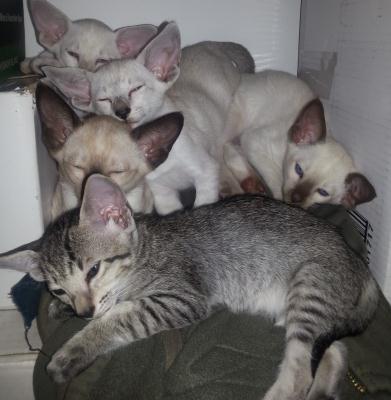
ALL ABOUT ME
The first few weeks and months of kitten ownership can influence your cat's personality for life. When you pick up your kitten from the breeder, it will be moved to a new environment, missing its mother and playmates and it will be feeling lost and unloved. Your natural kindness and the following rules will ensure a contented and healthy kitten.
KITTENS AND CHILDREN
It is essential that you explain carefully to your children how the new arrival should be treated. Of course, kittens love to be stroked and cuddled. They provide joy and entertainment for children, but gentleness of handling is essential. Kittens are not toys and need much care and attention. What can be an innocent game for a young child can cause distress to an animal. Teach your children correct handling and how to recognise when the kitten is unhappy.
CHOOSING YOUR KITTEN
Kittens should stay with their mother until they are 11 to 12 weeks old, especially purebred kittens such as Siamese, Persians, Abyssinians, Burmese, Birmans, Rex, etc. At this age, they should be fully weaned, toilet trained and ready for independence. They should also have received their first cat flu vaccination and their Feline Enteritis vaccination, the cost of which is included in the purchase price. A veterinarian certificate showing details of the vaccinations should be provided.
At this age, they should be bright and alert. Do not buy a kitten that does not fulfill these requirements.
If the kitten is for a child or a special person, it is a good idea to let the person pick the kitten. The temperament that suits one person will not always suit someone else.
Always get a receipt and as much information as possible about your kitten's family history. A reputable breeder will tell you how healthy a kitten is and what problems may occur when you get it home. The breeder should be able to show the pedigree charts and registration numbers of both parents and details of their breeder registration.
DESEXING
Most Breeders support early desexing. This means that if you purchase a kitten as a pet, it will already be desexed before you take it home. Early desexing is usually done between 10 and 14 weeks. It is amazing to watch the recuperative powers of a 12 week old kitten compared to an older animal. Female kittens, which have a more invasive operation, have been seen demanding food and chasing other kittens around the house on the afternoon of the operation while adult cats often take several days to fully recover. Desexed cats are not as likely to spray urine on your furniture and curtains.
It is a falsehood that female cats should have a litter before they are desexed. Male cats will be less likely to fight with the other cats in the neighbourhood if they have been desexed. What they do not know about will not worry them. Remember that some cats are ready to breed at six months of age. DO NOT LEAVE IT TOO LATE.
The Miracle of Life
"Come quick, come quick", their mother said,
"The time is near"
She feels that when the kittens come the children should be here.
She told them that a big orange Tom took "kitty" as his wife.
"It's Wonderful, a gift from God, the miracle of life".
At half a year young "Kitty" feels too painful too scared to appreciate six miracles, blind-eyed and yellow haired.
But she knows these lives depend on her and nature tells her how and as she cleans them, children ask "Mom, can we go now?"
But now and then for six more weeks the children visit her to play with six new magic toys of life and fur.
The six weeks pass, the newness gone and new home yet unfound,
Mum bundles up six miracles and takes them to the pound, Where lovingly, with gentle hands and no tears left to cry, the shelter workers kiss them once and take them off to die.
And "Momma Kitty" now she's called mourns her loss and then, she's put outside, and of course, she's pregnant once again.
Dad tells "Kitty" STOP THIS NOW or you wont live here long!
But deep inside Momma Cat, this time something's wrong.
Too young, too small, too often bred now natures gone awry, Momma Kitty feels it too and she crawls off to die.
She too is freed from this cruel world, and her time of strife.
How Harsh the truth, how high the price this "Miracle of Life"?
By Barry Taylor DVM
FEEDING
Cats have different nutritional requirements compared to dogs and owners must ensure that these are met. Most of the commercial available foods, tinned or dry, meet these requirements.
Fresh meat alone is not a balanced diet and can lead to digestive problems and even death in severe cases. Kittens should be fed two or three times a day until they are six months old. At this time they can be given a small amount of dry food for breakfast and a maximum of half a 400gram tin of cat food, less if the cat is getting fat. Some breeds are allergic to milk and milk products, so make sure that water is always available, preferably not in a plastic bowl. To encourage strong and healthy teeth, feed your cat fresh meat once or twice a week. The lumps should be at least 25 millimeters thick to encourage chewing.
GROOMING
Regular grooming keeps your cat's coat in excellent condition and prevents knots and hairballs. Grooming is essential in longhaired cats where the fur easily mats. The addition of a small amount of vegetable oil, butter, liver, heart or chicken once or twice a week to the evening meal assists in expelling hairballs.
INJECTIONS
A kitten should have its first injection by 12 weeks. The Feline Enteritis shot will last for twelve months and the Veterinarian will advise when future injections are needed and give you a certificate which breeding and boarding catteries require as proof of immunisation.
GENERAL HEALTH
Worming.
Roundworms
Roundworms can be present in both cats and kittens. Regular treatment using tablets or syrup is essential to prevent these parasites from recurring. Kittens can be wormed as young as three weeks of age. Cats should be wormed every three months.
Tapeworms.
In those areas where they occur, these worms should also be treated as these can be passed onto humans. Remember if you cat has fleas then it is very likely that it also has tapeworm.
Fleas.
The control of fleas is very important as fleas can pass on worms to cats, kittens and humans. A reputable flea powder and or flea collars for cats only are one way of controlling these pests. Take care with flea collars as these may set up a skin irritation in some cats.
Ringworm.
This is a highly contagious skin disease and can be passed to humans. Your vet will advise on the best treatment of this disease if it presents itself.
Ear Mites
Scratching ears or shaking the head could indicate the presence of ear mites which can cause pain and discomfort. Veterinary assistance should be sought immediately. Always clean the ears gently with cotton wool balls moistened with lukewarm soapy water. The presence of a large amount of dirt on a continual basis is often a sign of ear mites.
QUICK TIPS
Never lift a cat or kitten by the scruff of the neck only, give it support elsewhere, or you could risk breaking its neck or displace internal organs.
Carry Box.
If you want to take your pet with your on holidays, obtain a strong travelling cage with plenty of ventilation and take the cat or kitten for short drives to get it used to the motion of your vehicle.
Ribbons and collars
These should contain some elastic as they can be hooked by tree branches and cause strangulation.
Obtain from the Breeder, a veterinarian supplied vaccination certificate and a receipt showing full details of the purchase including:
- purpose sold for e.g. pet, show or breeding,
- name & address of seller,
- name & address of buyer
- date of sale,
- Breed & sex of animal.
CONTACTS
If you do not know what breed of kitten you would like to own, contact us or attend one of the cats shows that are held every few months in Brisbane.