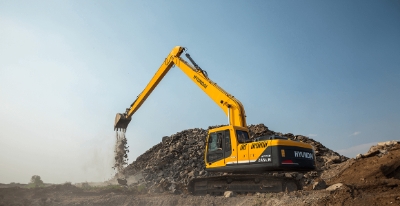
Standard excavators can handle a wide range of jobs, but they are not always the right fit for deep or hard-to-reach excavation. When access, depth, and safe operating distance matter, a long reach excavator can be the more practical choice.
Why long reach excavators are used on difficult excavation jobs
A standard excavator works well on many sites, but some projects call for more reach and more control than a conventional machine can offer. That is where a long reach excavator comes into its own.
With its extended boom and arm, it can work farther out and deeper into an excavation area without needing to get too close to the edge or into awkward ground conditions. On the right site, that makes planning easier and the work more manageable.
For contractors comparing machine options, this guide on what a long reach excavator is gives a useful overview of where these machines fit and why they are used.
Where a long reach excavator makes the most sense
Long reach excavators are typically used on jobs where a standard machine would struggle to reach the work area safely or efficiently. That often includes:
deep excavation
dredging and waterway maintenance
slope finishing
trenching in hard-to-access areas
work on unstable or difficult ground
The main advantage is not just reach for the sake of it. It is the ability to work from a better position. On some sites, that means staying farther back from water, soft ground, or unstable edges while still getting the job done accurately.
Standard long reach vs super long reach
Not all long reach excavators are built for the same kind of work. Some are designed for jobs that need moderate extra reach, while others are made for much more demanding conditions.
Standard long reach models
A standard long reach excavator is usually the better fit when the job needs more reach than a regular excavator can provide, but not to an extreme degree. These machines are commonly used for general excavation, water-related work, and slope shaping.
Super long reach models
Super long reach models are used when the machine needs to operate much farther from the work zone. That can be important on deeper excavation jobs, across waterways, or on sites where access is too restricted for close positioning.
In practice, the choice usually comes down to four things:
how far the machine needs to reach
how deep the excavation needs to go
what the ground conditions are like
how much room the site gives you to work with
Attachments matter more than people sometimes think
The boom and arm define the machine type, but the attachment often determines how well the excavator performs on the day.
Buckets, grapples, and hydraulic breakers are common examples. Depending on the work, some contractors may also look at options such as a tilting bucket for finishing slopes or a hydraulic thumb for handling material more securely.
This part is easy to underestimate. Even if the machine itself is right, the wrong attachment can slow the job down, reduce control, and make the whole setup less efficient than it should be. The attachment needs to match the actual task, whether that is digging, grading, handling debris, or breaking material.
What to look at before choosing one
Reach is important, but it should not be the only factor in the decision. A long reach excavator needs to suit the job as a whole, not just look right on paper.
Digging depth and working range
Digging depth is usually one of the first things people check, and for good reason. But horizontal reach matters just as much. On dredging, trenching, and slope work, the machine often needs to cover distance across the site, not just dig downward.
Stability at full extension
This is one of the biggest practical considerations. The farther the machine reaches, the more important stability becomes. That matters even more when heavier attachments are involved or when the machine is working close to its limits.
A machine might offer the reach you need, but if stability drops off too much at full extension, it may not be the best fit for the job.
Hydraulic performance and general condition
Hydraulics do a lot of the heavy lifting in day-to-day operation. On repetitive or precision work, poor hydraulic performance will show up quickly. Efficiency, responsiveness, and the general condition of the machine all make a difference once the job is underway.
Site conditions can make or break the decision
Even the right machine can be the wrong choice if the site does not allow it to work properly. Long reach excavators need room to move, position, and operate safely. Narrow access, overhead obstacles, uneven terrain, or soft ground can all affect whether the machine will perform as expected.
That is why site layout needs to be part of the decision early on. It is not something to leave until after the machine is selected.
Safety becomes even more important on deep excavation work
Deep excavation always brings extra risk, especially where collapse or instability is a concern. Standard precautions such as shoring, sloping, and benching still matter, and so does having an operator who understands the machine and the site conditions.
One of the practical benefits of a long reach excavator is that it can allow the machine to stay farther back from the excavation edge. That does not remove risk, but on the right site it can support a safer working setup.
Cost is about more than the machine itself
Hire cost is only one part of the picture. Transport, fuel use, operator requirements, and specialist attachments can all affect the total cost of using a long reach excavator.
That said, there are jobs where a standard excavator would need constant repositioning, more time, or a less efficient setup overall. In those cases, the long reach machine may make better sense operationally, even if the upfront cost looks higher.
Conclusion
A long reach excavator is not a replacement for a standard excavator on every site. It is a specialist machine for jobs where reach, access, and control are central to the work.
The real question is not whether a long reach model is available. It is whether the machine suits the excavation depth, site layout, attachment requirements, and working conditions of the project. When those factors line up, it can be the smarter and safer option.