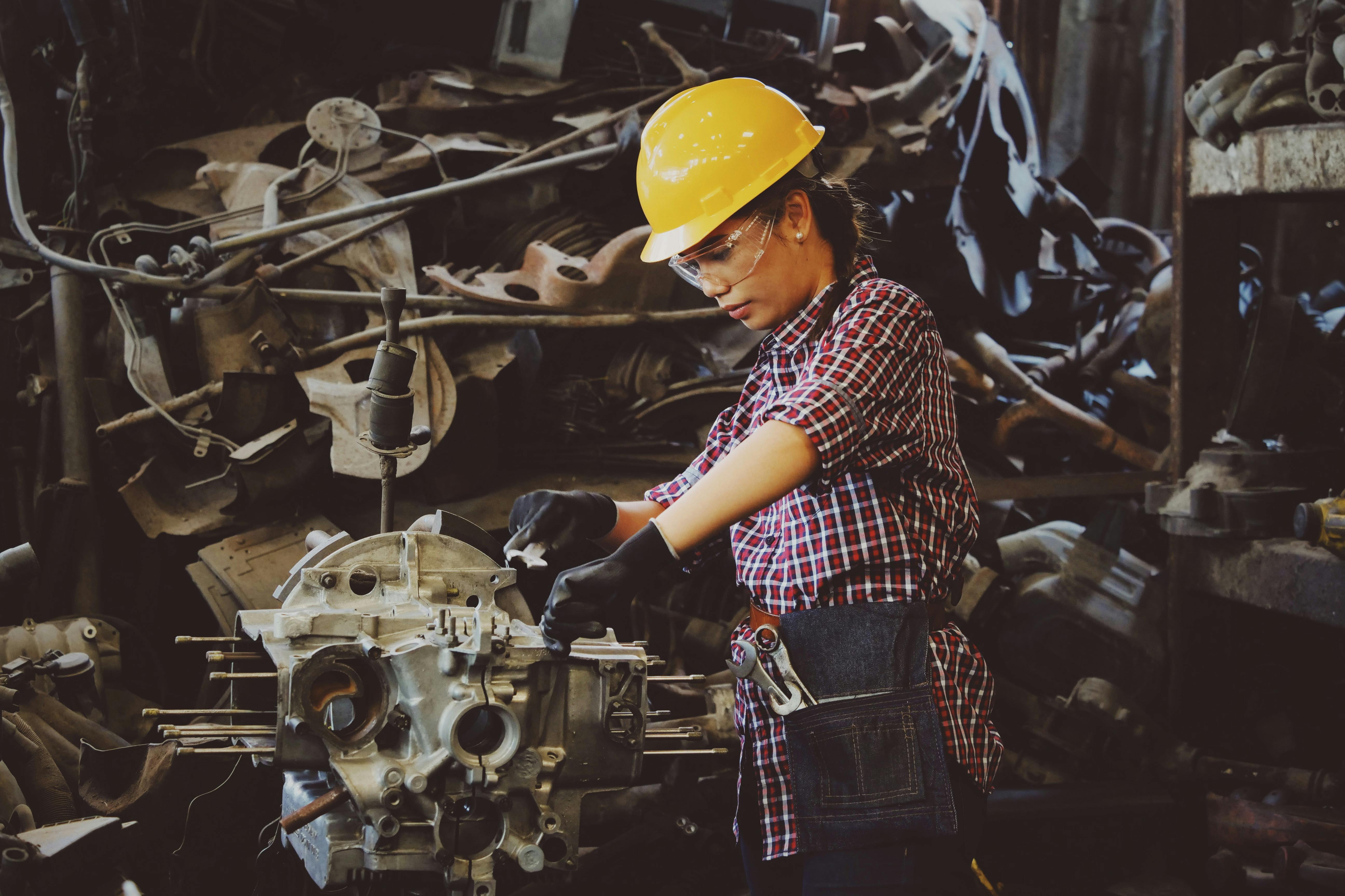
In industry, safety is really crucial. If we're not vigilant, building sites, warehouses and factories can all be hazardous locations.
The U.S. Bureau of Labour Statistics projected approximately 2 million nonfatal occupational injuries and illnesses in the private sector by 2022. That many people are suffering on the job is alarming!
The good news is that, with some basic safety guidelines, many of these mishaps can be avoided. Let's discuss ten recommended practices that will help industrial environments to be considerably safer for everyone.
1. Conduct Regular Safety Audits
Consider safety audits of your workplace equivalent to health checks. Your workplace needs routine check-ups, much as you visit the doctor to ensure you are healthy. These inspections help identify issues before they start mishaps.
Trained individuals meticulously examine everything in a safety audit. They examine tools, equipment, human behaviour, and machinery. Perhaps a machine is producing odd sounds, or a pathway is slipper. The audit crew notes everything like this.
Still, identifying issues marks only the beginning. Fixing those issues brings the true magic to pass. Create a list of items to work on following every audit and schedule deadlines to help you accomplish them. Your workplace thus becomes safer over time.
Frequent audits also ensure that your company implements all government-defined safety policies. Follow these guidelines since they are meant to safeguard employees.
2. Provide Comprehensive Safety Training
Imagine attempting to drive without ever having any instruction. Right, that would be absolutely dangerous. This holds true also in an industrial environment. To accomplish their jobs safely, everyone requires effective training.
Safety instruction ought to address several distinct aspects. Employees must first pick up correct tool and machine use. Each button and lever should be known to them, as well as safe usage techniques.
Still, it goes beyond simply running equipment. Employees also must know what to do should things go wrong. Should a fire strike, what then? Perhaps a chemical leak instead. Good training guides individuals in handling crises.
Learning to see hazards is another crucial component of instruction. Whether a tool breaks or a spill on the floor, workers should be able to identify when something isn't safe.
Also, safety instruction is not a one-time event. Workers have to learn about new technologies and approaches as they surface. Frequent refresher courses allow everyone to keep safety fresh in their consciousness.
3. Ensure Proper Use of Personal Protective Equipment (PPE)
Personal Protective Equipment, or PPE for short, is workers' equivalent of a suit of armour. That is the last layer of protection against mishaps and injury.
Various tasks call for different forms of PPE. Workers in some areas might merely require gloves and safety goggles. Others could require respirators, full body suits, and special boots. One should be aware of the PPE suitable for any employment.
Still, having the proper PPE is insufficient. Employees must be knowledgeable in its correct application. For instance, if a respirator doesn't fit correctly, it won't help. Moreover, safety goggles cannot shield your eyes if they are left atop your head!
Furthermore, lacking protection for workers are damaged or worn-out tools. A must are regular inspections and replacements.
Using PPE should become second nature, much as strapping on a seatbelt when you get in a car. Correct use of PPE by everyone indicates that your company's first concern is safety.
4. Maintain Clean and Organized Workspaces
An untidy workplace is like an accident just waiting to strike. You most likely would trip trying to go across a room full of toys in the dark.
Maintaining cleanliness and order benefits the appearance of the space, makes it appealing and helps to avoid mistakes. Properly arranged tools never cause anyone to trip over them. Nobody trips and falls when spills are promptly cleaned up.
Organisation also facilitates greater performance of personnel in their occupations. Workers save time not searching for tools when everything has a place and is in its right order. Their attention can be on effectively and safely performing their jobs.
Plan frequent cleaning and organising into your daily schedule. Set aside time after every shift so employees may clean their areas. In this sense, a safe, clean workstation marks the beginning of the next shift.
A neat workplace is a safer one. That's as basic as it gets!
5. Implement Effective Machine Guarding
Machines can be very dangerous if they're not used carefully. That's where machine guards come in. These are physical barriers that keep workers safe from moving parts, flying debris, and other hazards.
Think of machine guards like the cover on a blender. They keep hands and other objects away from the dangerous moving parts. In a factory, guards might be metal screens, plastic covers, or electronic sensors that stop the machine if someone gets too close.
But having guards isn't enough. They need to be the right kind of guard for each machine. They should protect workers without getting in the way of the work. And they need to be strong enough to do their job.
It's also important to check guards regularly. A damaged or missing guard can't protect anyone. Make sure guards are in place and working properly before starting any machine.
Remember, even the best guard can't protect a worker who removes or bypasses it. Train workers on why guards are important and never to remove them unless the machine is completely stopped and locked out.
6. Promote a Culture of Safety Awareness
Establishing a safe culture helps to make daily work life normal with regard to safety. It's about everyone, from the top executive to the most recent hire, constantly considering safety.
How might one promote this culture? First of all, it is about leadership. Workers follow managers' serious attitude towards safety. Talk about safety quite a bit. Call frequent meetings where people might raise safety issues. Celebrate when someone discovers and fixes a safety concern.
Urge employees to look out for one another. Someone should be at ease speaking up if they observe a colleague acting dangerously. This is about maintaining everyone's safety, not about getting people in hot water.
One more excellent approach to raise awareness is through safety drills. Get ready for an emergency—fire, injury, or otherwise by practising what to do. Everyone will be more ready should things truly go wrong the more you practise.
A good safety culture does not develop overnight. It demands time and work. But the workplace gets considerably safer for everyone when everyone is considering safety.
7. Develop Clear Emergency Response Plans
Emergencies still can strike even with the finest safety precautions. This is why it's so important to have well defined ideas on what to do when things go bad.
Consider first the kind of crises that might strike your company. Fire? chemical leak? Strong winds? Make a detailed, step-by-step emergency plan for every kind of crisis.
These plans should answer important questions like:
- How will you alert everyone about the emergency?
- Where should people go to be safe?
- Who is in charge of different tasks during the emergency?
- How will you make sure everyone is accounted for?
Make sure everyone knows your plans once you have them. Post them wherever people notice them. Review them in a meeting. Above all, though, get some practice!
Organise frequent drills whereby everyone performs the steps of reacting to an emergency. This clarifies where the strategy might need development and helps individuals remember what to do.
People may panic during a serious emergency. On the other hand, those who have repeatedly followed the strategy are more likely to recall what to do when it counts most.
8. Label and Mark Hazardous Areas Clearly
Clear labels and signage are like traffic signals for protection. They advise people on how to remain secure and alert them about threats.
Mark hazardous areas with clear, simple signs. These might be locations with hazardous machinery, high voltage, or toxic chemicals. Big and striking danger signs will grab people's attention right away.
Signage provides more than only cautions. Signs might indicate, for instance, where to find emergency exits, first aid kits, or fire extinguishers. They might remind folks to be cautious of particular threats or to don their safety gear.
Also, nobody reads the same language. Where you can, use images and symbols in addition to words. This ensures that, in whichever language one speaks, everyone gets the message.
Maintain clean, good condition indications. A fading or damaged sign would be difficult to read, therefore negating the intended use. Replace signs as they are old or broken.
9. Regularly Inspect and Maintain Equipment
Broken or badly kept machinery can be rather dangerous. Regular inspections and maintenance are thus rather vital.
Consider it as analogous to maintaining an automobile. You check the brakes or replace the oil before waiting for your car to fail. The same is true with industrial gear. Frequent visits help to identify little issues before they grow to be major, harmful ones.
Plan when to check and maintain every piece of machinery. For certain objects, this could be daily checkups; for others, less frequent but more thorough inspections. Consult the manufacturer's maintenance advice.
Search for wear and tear on inspections. Search for odd noises, loose components, or anything that feels "off." Should you discover issues, address them immediately. Stopping work for a little to mend something is preferable than having a major accident later.
Record all maintenance and inspections carefully. This lets you schedule for future demands and follow the past of any piece of equipment.
Besides being safer, well-maintained equipment performs better and lasts longer. Safety gains from this as well as business benefits!
10. Encourage Reporting of Unsafe Conditions
Those who daily operate machinery may find issues early. Encouragement of everyone to voice safety issues is therefore quite vital.
Provide a mechanism wherein employees may quickly document dangerous policies or conditions of work. This might be a suggestion box, a unique form, or perhaps a phone app. The crucial point is to make reporting concerns simple and fast.
Having a reporting mechanism alone is insufficient, though. Employees must be aware that using it is normal and even expected of them. They should never worry about running afoul of rules for voicing a safety issue.
When someone reports a concern, give it careful attention. Immediately investigate the matter and inform the individual of your actions. If you can't immediately solve the issue, explain why and what the strategy is.
Finally, each and every stated safety issue offers an opportunity to stop an accident before it starts. One of the most effective safety instruments you have is encouraging reporting.
Though it's not always simple, staying safe in industrial environments is quite vital. Following these 10 best practices will help us to make our workplaces far safer for everyone.
Remember that everyone plays a role in safety and it is not only that of one person. Working together to follow these guidelines will help us to avoid mishaps and keep one another safe.
So, let's commit to safety. Whether your position is manager or employee, you can help to make your place of employment safer. Start implementing these ideas right now, then inspire others to follow it. Working together, we can provide everyone with safer industrial environments.